
A Breakthrough in Vision Care — First-Ever 3D-Printed Cornea Restores Sight

A Breakthrough in Vision Care — First-Ever 3D-Printed Cornea Restores Sight
A Breakthrough in Vision Care — First-Ever 3D-Printed Cornea Restores Sight
A Breakthrough in Vision Care — First-Ever 3D-Printed Cornea Restores Sight
Important Note: 3D printed corneas are an emerging technology currently being studied and are not available as a treatment option at North Texas Ophthalmology Associates. This article is intended for educational purposes and discusses ongoing research in the field of corneal transplantation and vision restoration.
If you are experiencing vision problems related to a corneal condition, we encourage you to schedule a consultation with Dr. Colin Brown, our cornea specialist, to discuss currently available treatment options. Learn more about Dr. Brown here.
Schedule A Consultation With Dr. Colin Brown
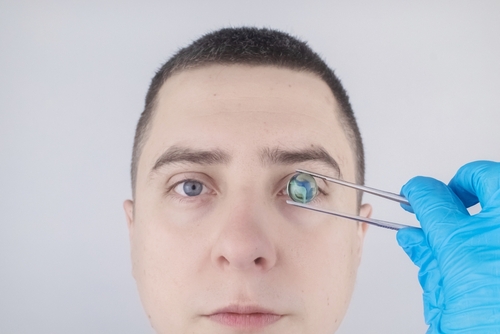
A historic medical milestone was recently reached when surgeons restored a patient’s vision using the world’s first 3D-printed, lab-grown corneal implant. This advancement signals a new era for individuals suffering from corneal disease or damage — and offers hope to millions worldwide.
Researchers at the Rambam Eye Institute in Haifa, Israel, partnered with biotechnology company Precise Bio to complete the first-ever human transplant using a cornea created entirely from cultured human cells. Unlike traditional corneal transplants, this innovative implant does not require donor tissue, yet functions remarkably like a natural cornea.
What Makes This 3D-Printed Cornea Revolutionary?
1. Solves the Global Donor Tissue Shortage
Millions of people worldwide suffer from corneal blindness, but donor corneas are in short supply. With this new bioprinting technology, a single donor cornea can be multiplied into hundreds of lab-grown implants, dramatically increasing accessibility.
2. Mimics the Look and Function of a Natural Cornea
The implant — known as PB-001 — closely replicates the clarity, shape, and biomechanical strength of a biological cornea. It allows surgeons to perform the procedure using standard transplant techniques, making the transition to this new technology seamless.
3. Decades in the Making
Scientists first demonstrated the concept of a 3D-printed cornea in 2018. After years of clinical development, engineering improvements, and safety validations, this technology has finally reached a point where it can be used in real-world surgery.
How 3D-Printed Corneas Could Transform Eye Care Restoring Vision for More Patients
Because lab-grown corneas can be produced in large quantities, this technology has the potential to dramatically reduce wait times and expand access — especially in regions without robust donor programs.
Improving Consistency and Safety
3D bioprinting allows for precise replication of corneal structure, offering more predictable outcomes and reducing variability between donor tissues.
Opening the Door for Bioprinted Organs
This breakthrough is more than a win for ophthalmology. Researchers believe similar techniques could one day be used to print cardiac tissue, skin grafts, or even solid organs.
 Who Could Benefit from This Technology?
Patients with the following conditions may one day be candidates for 3D-printed corneal implants:
Keratoconus
Corneal scarring from trauma or infection
Corneal dystrophies
Post-LASIK ectasia
Severe corneal thinning or irregularity
While the technology is not yet widely available, ongoing clinical trials are paving the way for broader use.
 What This Innovation Means for Our Patients at North Texas Ophthalmology Associates
At North Texas Ophthalmology Associates, we closely follow cutting-edge advancements in corneal surgery and vision restoration. While 3D-printed corneal implants are still in early clinical stages, breakthroughs like this shape the future of eye care — and we remain committed to bringing proven, safe, innovative treatments to the Wichita Falls community.
As the technology progresses, patients with corneal disease may have access to new treatment options that are more consistent, more accessible, and potentially life-changing.
Considering Corneal Issues? We’re Here to Help.
If you’ve been diagnosed with keratoconus, corneal scarring, or other corneal disorders, our specialists can guide you through your treatment options and keep you updated on emerging technologies.
Contact North Texas Ophthalmology Associates
940.240.8400
www.ntoaeye.com
Wichita Falls, TX

All Eye
Care Services

Keep
In Touch
© 2026 North Texas Ophthalmology Associates. All rights Reserved | Accessibility Statement| Privacy Policy | Language Policy
Powered by:

